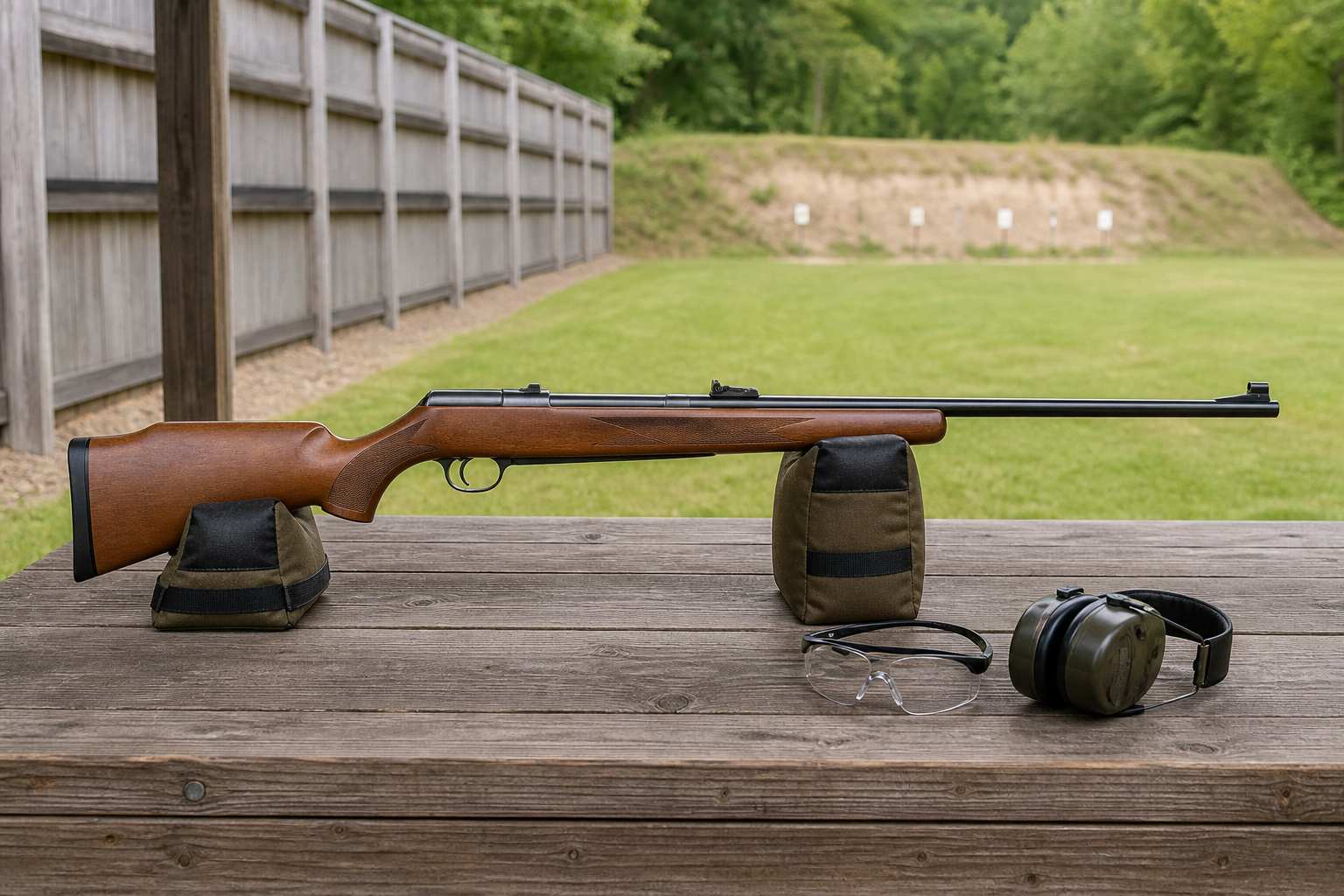
A range trip can fall apart before the shot if the rifle arrives with a loose fitting, a depleted air source, a damaged optic or pellets that are not right for the gun. Most of these problems are details that get noticed only after unpacking. A quick check at home gives you time to read the manual swap out a worn-out part or leave behind anything that seems off. Think of preparation as a safety check and a performance check second.
Start with a safe controlled workspace
Pick a lit area where you can work without distractions. Keep the space clear of children and anyone not involved. Always keep the muzzle pointed in a direction. Take out the magazine or loading device. Make sure no pellet is in the breech. Treat the rifle as loaded until you have confirmed it is not. The safety catch is not a replacement for handling.
Find out what kind of operating system the rifle uses. Spring-piston, gas-ram, pre-charged pneumatic and multi-pump rifles all have ways to unload and store. Follow the manufacturer's instructions exactly. If you are not sure the rifle is unloaded or properly depressurized, stop. Do not try to figure it out on your own. Get help from someone who knows what they are doing.
Inspect the exterior before checking performance
Look over the stock, grip, fore-end, buttpad and sling mounts. Check for cracks, dents, sharp edges or parts that move when they should not. Cosmetic damage like scratches or scuffs is usually fine.. A crack near the action a broken mounting point or a stock that shifts is a problem. Fix this before shooting.
Check the barrel, muzzle and sights. Never put anything into the bore. The bore must be clear. The muzzle should not be bent. Damaged. If your rifle allows it you can shine a light in from the chamber end.. Only if the manual says it is safe. Never push a tool. Object through the barrel just to see what's inside.
Gently operate all controls. Do not dry-fire unless the manual says it is okay. Test the safety to make sure it moves as it should.. Do not assume a solid click means it works. If the safety, trigger or cocking handle feels rough too heavy or moves unevenly set the rifle aside. Get it looked at by a technician.
Check air, seals and fittings on models
Air problems are not always obvious. Look carefully at the cylinder, bottle, fill port, gauge and protective caps. Check for dents, rust, damage to the threads or signs of leaking. Do not use a cylinder that has been exposed to heat or impact. Do not use one with a history. Stick to the markings and instructions on the component. Never guess about its pressure or condition.
Listen for a hiss during a proper approved check. Keep your face and hands away from the area where a leak might be. If the pressure drops fast the gauge acts strangely or a fitting cannot sit properly stop. Do not. Adjust a pressurized part without the right tools and instructions. Never try to open a cylinder use a wrong adapter or replace a seal without the correct guidance.
On spring-powered and gas-ram rifles check the cocking linkage, hinge points and fasteners. Look for looseness or damage. Do not try to open a spring or gas system. Trained people with proper tools should do this.
Verify the loading system and ammunition
Use only ammunition recommended for the rifle and the correct caliber. Throw away any pellets that're bent, corroded, dirty or damaged. Do not mix pellets with debris. Just because a pellet fits the breech does not mean it is safe or right for the gun.
Check the magazine, probe, loading tray and breech seal. Look for dirt, cracks or warping. The loading system should move smoothly. A magazine that sticks fails to feed or sits high can cause a problem. Always keep the muzzle pointed in a direction and keep your finger off the trigger.
After storage do not fire a rapid series of shots. Make sure the action closes properly. Check that any needed maintenance has been done. Some systems need lubrication. Others can be ruined by oil in the place.
Confirm the sighting setup and range equipment
Make sure optics or open sights are tight. Check that rings and mounts are secure. Adjustment controls should be protected during transport. Loose rings, moved sights or weak mounts waste time at the range. Can ruin your accuracy.
If the fasteners have torque specifications use the tool. Do not guess. Ask a gunsmith if you are not sure. Pack eye protection. Hearing protection if needed. Bring a case and be sure you have a backstop plan.
Keep pellets in a container. Keep them away from anything that could damage or contaminate them. Bring the manual for a rifle. Pack approved cleaning supplies. A notebook can help you record a fault without testing it again.
Use this stop-or-go checklist
Before you leave make sure these things are true:
– The rifle is unloaded, handled safely and locked in a case.
– The barrel and muzzle are clear and not damaged.
– The stock, action, trigger, safety and cocking parts show no movement or damage.
– The cylinder, gauge, seals and fittings have no damage or signs of leakage.
– The magazine and loading system work without force.
– The ammunition matches the rifle. Is clean and undamaged.
– The sights, mounts, eye protection and other gear are ready.
– You have checked the rules and transport requirements for your destination.
If any item fails the decision changes from go to no-go. Do not let a long drive, a reserved lane or the urge to test a zero convince you to use gear. Mark the problem. Store the rifle safely. Read the manual. Talk to the manufacturer or a qualified professional.
Make the routine part of ownership
A pre-range inspection works best when it is short enough to do every time and serious enough to stop a trip. After use a fall, water exposure or unexplained changes in accuracy do a full maintenance check. Keep records of cleaning seal replacements and service work. This helps future decisions be based on facts, not memory.
Range rules, transport requirements and regulations change. Always check sources before going to a new range. Follow the range's instructions. Safe air rifle handling is not one action, at the firing line. It is the chain of decisions made before the rifle leaves your home.