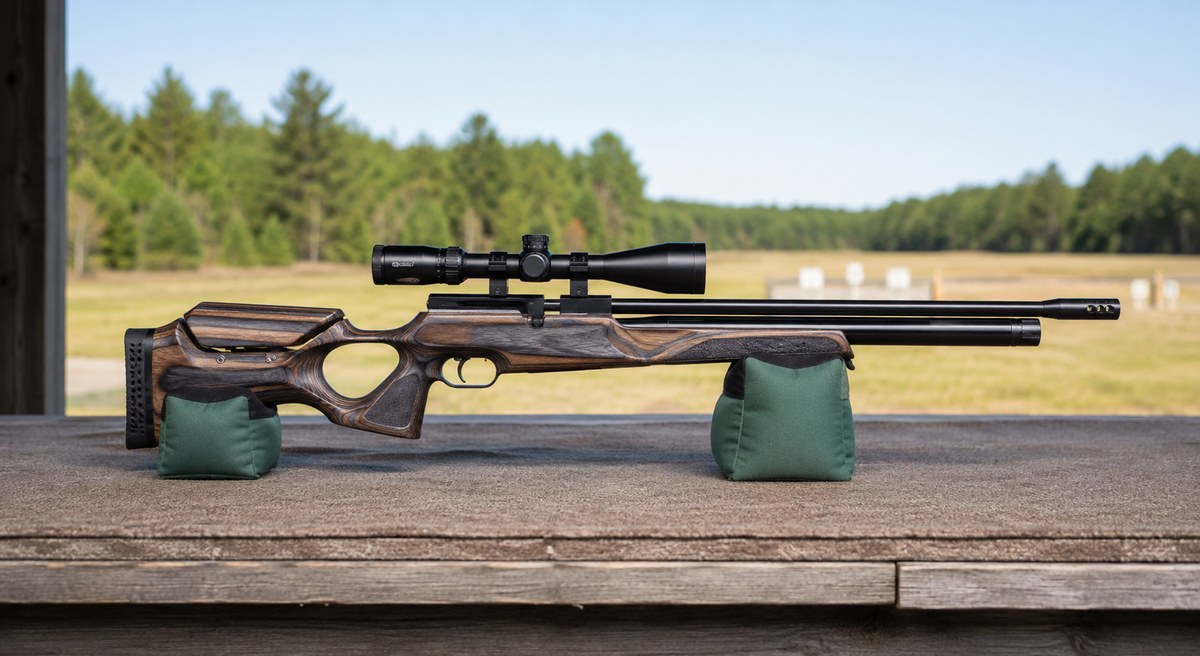
Understanding Backstop Safety, for Small Air Rifle Ranges
Setting up an air rifle range is not about putting a target in your backyard. One of the things to think about is safety, especially what is behind the target. If a pellet goes off course the risk of harm grows quickly. The area behind the target must be carefully. Protected to prevent accidents.
Evaluating the Target Area and Beyond
Start by treating your backstop as the safety feature, not something you think about last. This backstop should stop all pellets. Keep ricochets under control. You need to consider the space behind the target and how it connects to your property line.
Walk along the firing line. Look at what lies behind the target. Check for anything at the height of the target. Things that could block a shot, a shot or a shot that goes off to the side. Hard surfaces like metal fences, concrete walls or even water can make pellets bounce in ways.
If you can use a backstop made for air rifles. These are built to handle the energy of pellets safely. Avoid using homemade barriers like wood, cardboard or household items. These materials may not stop a pellet. Can give a sense of security. If the spot you picked doesn't work well for containment move your range to a location.
Choosing the Right Target and Holder
Your target and its holder should work with your backstop. Paper targets are great for seeing where you're hitting. They do not stop pellets. Make sure your target holder is strong, stable in wind or rain and doesn't have edges that could send pellets back toward you or anyone nearby.
Always check the target and holder before every session. Replace paper away. Throw out damaged or worn holders. A loose or unstable target can lead to shooting form and less control. This means chance of missing the target and more risk behind it.
If you're using targets. Like pop-up targets or electronic ones. Be extra careful. Only use targets made for air rifles and the kind of pellets you are using. Read the instructions carefully. Make sure there is space around the target so a pellet can't hit something. Never use things like glass bottles, cans or other household items as targets. They can break, fly apart or deflect in ways and cause injury.
Establishing a Clear Firing Line
A marked firing line helps everyone stay safe. Keep one line where shooters stand and everyone including kids and pets. Must stay behind it. For inexperienced shooters adult supervision is not optional. An adult must be in charge of the air rifle and ammunition not just watching.
Always keep the rifle pointed in a direction. This means when loading, clearing jams adjusting sights or checking the target. Only load the rifle when the shooter is ready and the area is clear. If someone needs to go to the target stop shooting. Make the rifle safe according to the manual before anyone moves near the range.
Children and pets may not understand the danger of the firing line. They could wander into the path of a pellet. So you need to be ready for distractions. A verbal stop command like "Stop!" can help,. It must be combined with a system. Like a stop signal or a barrier. To ensure safety.
Routine Equipment Inspection
Before every shooting session take time to check your air rifle. Look for blockages in the barrel. Make sure all parts are tight and secure. Test the safety mechanism and the trigger. If the rifle feels off looks damaged or has been wet don't shoot it.
Be alert for warning signs. If you hear rattles feel resistance when cocking or notice sights stop and inspect the rifle. Don't keep firing to see what's wrong. A small issue can quickly turn into a problem.
Follow the manufacturer's cleaning and maintenance instructions. Clean your air rifle regularly. Don't over-lubricate it. Much oil can damage seals. Make parts stick. Keep a log of maintenance and storage conditions. This helps you notice patterns and identify problems before they get worse.
Implementing Secure Storage Practices
After shooting handle your air rifle with care. Take it off the firing line before packing up. Make sure it's safe and unloaded according to the manufacturer's directions. Keep it separate from ammunition at all times.
Never leave a loaded air rifle not on a table not in a car not. Store your pellets in their container or in a labeled child-proof container. Keep them out of reach of children and pets.
Also manage access to storage. If you use a lockbox or a cabinet make sure authorized people have the key or combination. Keep records of who has access and when.
Store your gear in a place. Moisture can cause rust and damage. Keep air rifles and pellets away from heat or cold. Clean them after use. Store them properly to last longer and stay safe.
Final Considerations
Before you start ask yourself these questions using a checklist:
– Can I stop all missed shots?
– Am I far enough from people, pets and neighbors?
– Is my air rifle in good working order?
– Is one adult responsible and in charge at all times?
– Do I have secure storage for the air rifle and ammunition?
– Have I checked local laws and rules about air rifles?
If any answer is "no " delay your session. Laws, about air rifles can change. What's allowed today might not be tomorrow. Checking with authorities keeps you safe and legal.
A smart careful approach makes shooting safer and more enjoyable. It takes effort. It reduces risk and builds confidence. Safety should not be left to chance. It's built from preparation not luck.